

Introduction
Learning multiplication is one of the most important steps in a child’s math journey. It forms the foundation for almost every higher-level math concept, including division, fractions, algebra, and even real-life problem-solving. Once kids understand multiplication, numbers start to make more sense, and math becomes much easier to navigate.
However, many children struggle when they first begin learning multiplication. Memorizing times tables can feel overwhelming, patterns may be confusing, and some kids lose confidence when they can’t recall facts quickly. Without the right strategies, multiplication can become frustrating instead of exciting.
The good news is that learning multiplication doesn’t have to be difficult. In this article, you’ll discover simple, fun, and effective techniques that help kids master multiplication with ease. From visual tricks and games to hands-on activities and smart learning strategies, these methods make the process enjoyable and stress-free for both kids and parents.
What Is Multiplication? (Beginner-Friendly Explanation)

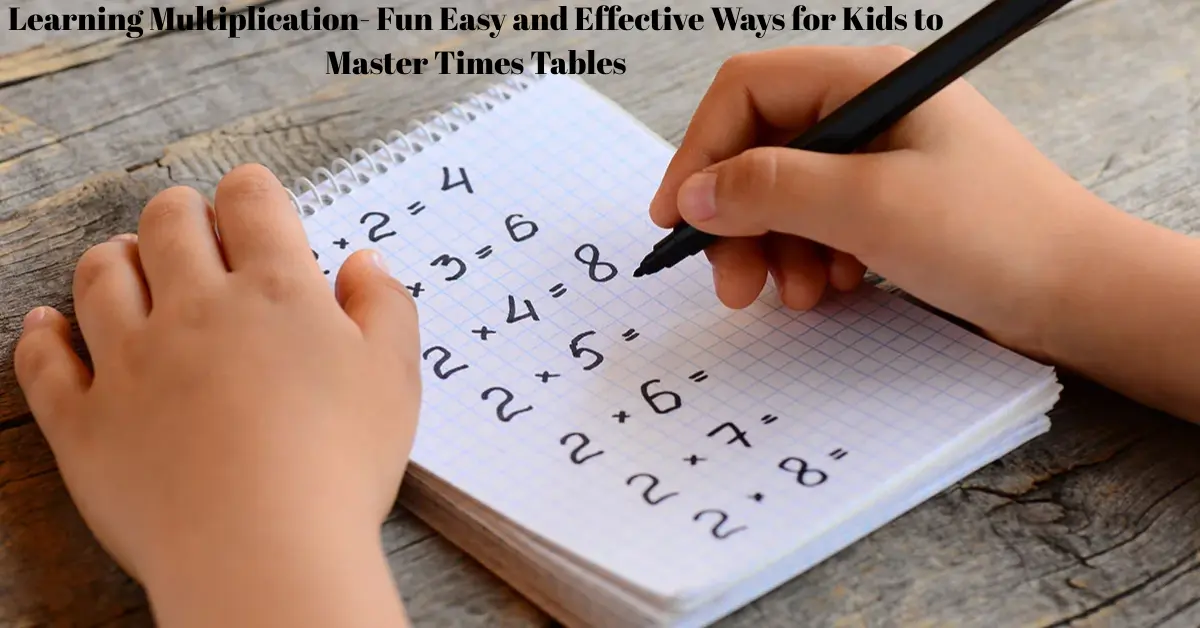
Multiplication is a faster and more efficient way of adding the same number again and again. Instead of writing 3 + 3 + 3 + 3, we can simply write 4 × 3, which means “four groups of three.” This helps kids work with larger numbers more quickly and understand how quantities grow.
For beginners, it helps to think of multiplication as grouping. If there are 5 bags with 2 apples in each, multiplication tells us the total number of apples without counting them one by one. This grouping idea shows up in everyday life—when arranging items, sharing objects, cooking, or measuring.
Understanding multiplication also prepares kids for future math topics such as division, fractions, multi-step word problems, and algebra. It builds number sense and improves confidence when tackling more complex operations. When kids grasp what multiplication really means, memorizing times tables becomes much easier.
May be you like it:
Exams Quotes for Students – Motivational And Positive Exam Quotes
Education Theories – Types Importance, And Classroom Applications
Education Theorists – Key Thinkers and Learning Theories Shaping Modern Education
Learning in Spanish Translation – How to Say ‘Learning’ and Improve Your Spanish
Learning Multiplication – Fun Easy and Effective Ways for Kids to Master Times Tables
When Should Kids Start Learning Multiplication?

Most children begin learning multiplication around 2nd or 3rd grade, typically between the ages of 7 and 9. At this stage, kids have already built a strong foundation in basic addition and subtraction, which makes it easier for them to understand how multiplication works.
Before learning multiplication, kids should be comfortable with:
- Counting forward and backward
- Skip counting (by 2s, 5s, and 10s)
- Adding the same number repeatedly
- Recognizing groups or sets of objects
These early math skills act as building blocks. When a child can skip-count or group items naturally, they are ready to move into multiplication without feeling overwhelmed.
Every child learns at their own pace, so some may show interest sooner, while others may need more time. The key is to watch for signs of readiness—such as asking questions about bigger numbers or showing curiosity about how many items are in a group. With the right guidance, kids can begin learning multiplication confidently and smoothly.
Best Ways to Teach and Learn Multiplication
There is no single “right” way to teach multiplication. Different kids learn in different ways, so a mix of visual methods, hands-on activities, and simple tricks makes the process easier and much more engaging. Here are some of the most effective techniques:
Using Repeated Addition
Repeated addition is the simplest way to introduce multiplication because it connects a new idea to something kids already understand.
For example:
3 × 4 means 4 + 4 + 4.
By showing that multiplication is just adding the same number multiple times, kids begin to see multiplication as a shortcut. This foundation helps them later when they start memorizing times tables.
Skip Counting
Skip counting is one of the fastest ways for kids to recognize multiplication patterns.
Examples:
- Counting by 2s: 2, 4, 6, 8, 10…
- Counting by 5s: 5, 10, 15, 20, 25…
- Counting by 10s: 10, 20, 30, 40…
Skip counting helps kids build rhythm and quickly notice number patterns. This makes memorizing multiplication facts far easier.
Multiplication Arrays
Multiplication arrays use rows and columns to show how multiplication works visually.
Example:
To show 3 × 4, draw 3 rows of 4 dots.
Arrays help kids see multiplication, not just memorize it. They work especially well for visual learners because they show how groups create larger numbers.
Multiplication Charts
A multiplication chart gives kids an instant overview of how numbers connect.
Using a multiplication chart helps children:
- Spot patterns
- Learn times tables faster
- Build confidence
- Practice independently
It’s a powerful tool for both classroom use and home learning.
Times Table Patterns and Tricks
Every times table has easy patterns that make learning multiplication more fun:
- 2s: Numbers double
- 5s: Always end in 0 or 5
- 9s: Digits add up to 9 (e.g., 9×4 = 36 → 3+6 = 9)
- 10s: Just add a zero
These shortcuts help kids feel more successful and encourage them to keep practicing.
May be you like it:
Education in Russia – Top Universities Programs And Opportunities for International Students
Education is Important to Society Because It Matters
Education Benefits for Veterans – Maximize Your GI Bill Scholarships And Training
Learning Korean Alphabet – A Beginner’s Guide to Hangul
Teacher Appreciation Week 2026 – Dates, Ideas, and Ways to Celebrate
Fun Activities to Help Kids Learn Multiplication
Making multiplication enjoyable is one of the best ways to help kids remember it. When learning feels like play, children stay motivated, engaged, and confident. Here are some fun and effective activities to make multiplication practice exciting:
Multiplication Games
- Card Games:
Use a deck of cards. Flip two cards and multiply the numbers. The player with the highest product wins the round. - Board Games:
Create a simple path game where kids answer multiplication questions to move forward. This adds excitement and challenges. - Online Games:
Digital multiplication games provide instant feedback, colorful visuals, and rewards that motivate kids to keep practicing.
Real-Life Multiplication Activities
Multiplication is everywhere in daily life, and using real objects helps kids understand it better.
Fun examples include:
- Cooking: If a recipe calls for 3 cups of flour and you double it, that’s 3 × 2.
- Sorting Snacks: Create groups of snacks like crackers or grapes and multiply how many groups there are.
- Shopping: Ask kids to figure out the total cost of buying multiple items.
These real-world moments make multiplication meaningful and practical.
Hands-On Tools and Visual Aids
Kids learn faster when they can see and touch what they’re learning.
Helpful tools include:
Counters or tokens to make groups
- Beads or buttons for arrays
- LEGO blocks for building multiplication models
- Flashcards for quick practice
Hands-on learning boosts understanding and memory by turning abstract ideas into something kids can physically work with.
Activities like these transform learning multiplication from a stressful task into a fun and rewarding experience.
May be you like it:
Teacher Jokes | 50+ Funny Jokes for Teachers, Students And Adults
Teacher from Fairly OddParents – Mr. Crocker And School Characters Explained
Teacher Incentive Allotment – Benefits, Types, and How It Works
Teacher Vanderbilt Form – Step-by-Step Guide for Accurate ADHD Assessment
Learning Objective Verbs – A Complete Guide with Examples And Tips
Common Challenges When Learning Multiplication (and Solutions)
It’s normal for kids to face challenges when learning multiplication. Understanding these struggles—and knowing how to solve them—can make the process smoother, less stressful, and more enjoyable.
Difficulty Memorizing Multiplication Facts
Many children struggle with memorizing times tables. The numbers can feel random, and memorization without understanding often leads to frustration.
Solution:
Use strategies like skip counting, patterns (2s, 5s, 10s, and 9s), and daily short practice sessions. Flashcards and games also make repetition more fun and less overwhelming.
Mixing Up Similar Facts
Kids often confuse facts such as 6 × 7 or 7 × 8, which are trickier to remember.
Solution:
Teach simple memory tricks or rhymes, and use visual aids like arrays or grids. Showing these numbers in patterns helps them stick.
Losing Confidence or Feeling Overwhelmed
If multiplication feels too hard, kids may think they “aren’t good at math,” which slows down their progress.
Solution:
Break tasks into small steps. Celebrate small wins, use positive reinforcement, and focus on understanding rather than speed. Keep sessions short but consistent.
Relying Only on Rote Memorization
Some students try to memorize every multiplication fact without understanding the concept behind it.
Solution:
Start with hands-on tools—like counters, arrays, and skip counting—before expecting memorization. Understanding makes recall much easier.
Forgetting Previously Learned Facts
Even after learning a few times tables, kids may forget them if they don’t practice regularly.
Solution:
5–10 minutes of daily multiplication review helps keep facts fresh. Use worksheets, games, or conversation-based practice to keep it interesting.
Overcoming these challenges early builds confidence and helps children develop a strong foundation for more advanced math skills.
Tips for Parents to Support Learning at Home
Parents play a big role in helping kids feel confident and successful when learning multiplication. With the right support and a positive environment, children learn faster and enjoy the process more. Here are some simple, effective ways to help at home:
Practice a Little Every Day
Short, daily practice sessions work better than long, occasional ones.
Just 5–10 minutes a day can help multiplication facts stick without overwhelming your child.
You can use:
- Flashcards
- Quick drills
- Short worksheets
- Simple verbal questions during everyday activities
Make Learning Fun and Playful
Kids learn best when they’re relaxed and having fun. Turn multiplication practice into a game instead of a chore.
Ideas include:
- Rolling dice and multiplying the numbers
- Multiplication bingo
- Using colorful counters or building blocks
When learning feels like play, kids are more willing to participate.
Encourage Understanding Before Memorization
Before expecting kids to memorize facts, make sure they understand what multiplication means.
Use objects, pictures, or arrays to show how groups work.
This deeper understanding prevents confusion later on.
Celebrate Small Wins
Confidence is key. Celebrate progress—even small steps like mastering one new fact or solving a tricky problem.
Positive reinforcement helps kids stay motivated and eager to learn more.
Use Real-Life Examples
Show kids how multiplication appears in everyday life:
- Counting snacks
- Doubling recipes
- Figuring out total costs when shopping
Real-world examples help kids understand why multiplication matters and make it easier to remember.
With consistent support, encouragement, and playful practice, parents can make learning multiplication a positive and rewarding experience at home.
Printable and Digital Resources for Learning Multiplication
Having access to the right resources can make learning multiplication smoother, more fun, and more effective. A mix of printable tools and digital platforms helps kids learn in different ways and keeps practice engaging.
Printable Multiplication Charts
Printable multiplication charts are one of the most helpful tools for beginners. They give kids a visual overview of how numbers connect and help them quickly spot patterns.
Benefits of a multiplication chart:
- Builds confidence
- Encourages independent practice
- Helps with memorization and pattern recognition
Parents can place charts on walls, study desks, or inside notebooks for quick daily review.
Worksheets for Extra Practice
Worksheets give kids structured opportunities to practice specific multiplication facts.
Types of worksheets that help:
- Single times table worksheets (e.g., only 4× facts)
- Mixed multiplication problems
- Word problems for real-life application
- Color-by-number multiplication sheets
These provide repetition, variety, and gradual difficulty to support steady progress.
Flashcards for Quick Learning
Multiplication flashcards are great for short, effective practice sessions.
Kids can use them alone, with parents, or with friends.
Flashcards help with:
- Speed
- Memory
- Confidence
- Quick recall of facts
Digital flashcard apps also work well for on-the-go practice.
Interactive Apps and Websites
Digital tools make learning multiplication more exciting with colorful visuals, sounds, and rewards.
Features often include:
- Timed challenges
- Games with levels
- Animated explanations
- Immediate feedback
These apps keep kids motivated and turn practice into play, which helps with long-term retention.
Printable Games and Activities
Parents and teachers can use printable board games, dice activities, and cut-and-paste multiplication sheets.
These resources help kids:
- Stay engaged
- Practice without pressure
- Build understanding through interactive tasks
Hands-on printable activities are especially great for younger learners who benefit from movement and tactile learning.
Using a combination of printable tools and digital resources can greatly improve a child’s experience with learning multiplication, making it fun, flexible, and effective.
How Long Does It Take to Learn Multiplication?
The time it takes for a child to learn multiplication varies depending on their age, learning style, practice habits, and prior math knowledge. While some kids may pick up multiplication facts quickly, others need consistent, gradual practice to fully master them.
Typical Learning Timeline
- 2–4 weeks: Kids can begin to understand the concept of multiplication using repeated addition, arrays, and skip counting.
- 1–3 months: With regular practice, children can memorize basic times tables (2s, 5s, 10s).
- 3–6 months: Most kids achieve mastery of all times tables up to 12×12, with continued reinforcement.
Consistency, not speed, is the key. Short daily practice sessions often lead to faster and longer-lasting results than occasional long practice sessions.
Factors That Influence Learning Speed
- Practice Frequency: Regular, short sessions help retention.
- Learning Style: Visual, auditory, or hands-on approaches may make learning easier for different children.
- Motivation and Confidence: Encouragement and fun learning methods improve engagement.
- Foundational Skills: Kids who are strong in addition, subtraction, and number sense often learn multiplication faster.
What Mastery Looks Like
A child has mastered multiplication when they can:
- Recall times tables quickly and accurately
- Apply multiplication to real-world problems
- Recognize patterns and use tricks to solve problems efficiently
Mastery doesn’t mean perfection, but it does mean confidence and fluency with numbers. With the right strategies, learning multiplication becomes achievable and even enjoyable.
Conclusion
Learning multiplication is a crucial step in a child’s math journey. It forms the foundation for advanced math concepts like division, fractions, and algebra, while also helping children develop confidence with numbers in everyday life. While memorizing times tables can sometimes feel challenging, the right strategies make multiplication fun, understandable, and rewarding.
By combining visual aids, hands-on tools, games, and daily practice, children can master multiplication in a way that is both effective and enjoyable. Parents and teachers who encourage curiosity, celebrate progress, and make learning playful can significantly improve a child’s success.
Whether using multiplication charts, interactive apps, worksheets, or real-life activities, consistent practice paired with engaging methods ensures that learning multiplication becomes a positive experience. With patience, creativity, and support, every child can not only learn multiplication but also develop a love for math that lasts a lifetime.
May be you like it:
Learning Calculus Made Easy – Beginner’s Guide to Mastering Calculus
Examkrackers MCAT – Complete Guide to High-Yield MCAT Prep And Study Resources
Exams Crossword Clue – Tips Examples and Answers to Solve Crossword Puzzles
