

Introduction
Understanding education theories is essential for anyone involved in teaching, learning, or developing educational programs. These theories explain how people learn, why they learn the way they do, and which teaching methods create the most meaningful learning experiences. Over the years, educators and researchers have proposed a wide range of theories—from behaviorism and cognitivism to constructivism, humanism, and modern social learning models. Each theory offers valuable insights into how knowledge is formed, how skills are developed, and how educators can shape effective learning environments.
In today’s rapidly evolving world, where digital learning, personalized instruction, and skill-based education are becoming the norm, understanding the foundations of these theories is more important than ever. By exploring the major education theories, we gain the tools to design better classrooms, improve student engagement, and create learning experiences that truly make an impact.
What Are Education Theories?

Education theories are organized explanations that describe how people learn, what influences learning, and which teaching methods are most effective. They provide scientific and philosophical frameworks that help educators understand the learning process and design better instructional strategies.
These theories are developed by psychologists, researchers, and educators who study human behavior, cognition, motivation, and social interaction. Each theory offers a different perspective — for example, some focus on how the environment shapes behavior, while others emphasize mental processes, personal experiences, or social influences.
In simple terms, education theories help answer questions like:
- How do students absorb and retain information?
- Why do learners respond differently to the same teaching methods?
- What motivates students to learn?
- How can teachers improve understanding and engagement?
By using education theories, teachers can create learning environments that meet diverse student needs, support deeper learning, and improve overall educational outcomes.
May be you like it:
Exams Quotes for Students – Motivational And Positive Exam Quotes
Education Theories – Types Importance, And Classroom Applications
Education Theorists – Key Thinkers and Learning Theories Shaping Modern Education
Learning in Spanish Translation – How to Say ‘Learning’ and Improve Your Spanish
Learning Multiplication – Fun Easy and Effective Ways for Kids to Master Times Tables
Types of Education Theories

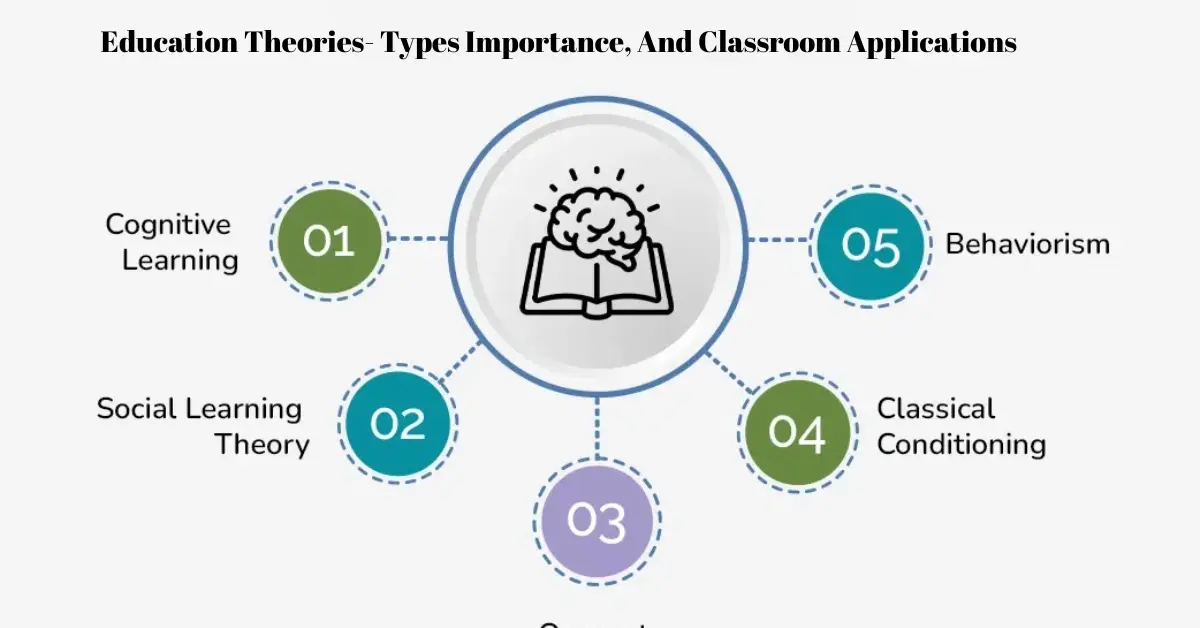
Education theories can be grouped into several major categories, each offering unique insights into how learning happens. Understanding these types helps educators choose the best teaching methods for different learners.
Behaviorism
Behaviorism focuses on observable actions rather than internal thoughts. It suggests that learning occurs through repetition, reinforcement, and conditioning. Teachers apply behaviorism through rewards, feedback, and structured practice.
Cognitivism
Cognitivism explains learning as a mental process. It emphasizes memory, problem-solving, and critical thinking. This theory highlights how learners process, store, and retrieve information.
Constructivism
Constructivism states that learners build (or “construct”) their own understanding based on experiences. It encourages hands-on learning, exploration, and real-world application.
Humanism
Humanistic theories focus on personal growth, emotions, and self-directed learning. They emphasize empathy, motivation, and creating a supportive learning environment.
Social Learning Theory
This theory suggests that people learn through observation, imitation, and interaction. It highlights the role of peers, teachers, and social context in shaping behavior and skills.
Connectivism (Modern Theory)
Connectivism explains learning in the digital age. It emphasizes networks, technology, and the ability to find and apply information rather than memorizing it.
May be you like it:
Education in Russia – Top Universities Programs And Opportunities for International Students
Education is Important to Society Because It Matters
Education Benefits for Veterans – Maximize Your GI Bill Scholarships And Training
Learning Korean Alphabet – A Beginner’s Guide to Hangul
Teacher Appreciation Week 2026 – Dates, Ideas, and Ways to Celebrate
Why Education Theories Matter
Education theories are essential because they help teachers understand why certain methods work and how to improve learning outcomes. Instead of relying on guesswork, educators can use these theories as evidence-based guides to make informed decisions in the classroom.
They Improve Teaching Strategies
Education theories offer clear frameworks for choosing effective instructional methods. Whether it’s using visual aids, hands-on activities, or collaborative learning, theories help teachers match strategies to how students learn best.
They Support Student-Centered Learning
Modern education emphasizes individualized learning. Theories help teachers recognize different learning styles, abilities, and motivations, allowing them to design lessons that meet diverse student needs.
They Enhance Student Engagement
By understanding what motivates learners, teachers can create learning environments that boost participation, curiosity, and long-term retention. Theories provide tools for keeping students active and involved.
They Guide Curriculum Development
Education theories influence how curricula are structured — from lesson planning to assessment design. They ensure that learning goals, activities, and evaluations align with cognitive and developmental stages.
They Help Solve Classroom Challenges
Theories give educators practical solutions for managing behavior, improving communication, and encouraging social interaction. This results in smoother classroom routines and better learning experiences.
They Adapt Learning for the Digital Age
With online learning and technology becoming essential, modern theories like connectivism help educators create digital classrooms, integrate tools, and build skills for the future.
Major Education Theories Explained
Understanding the major education theories helps teachers, parents, and learners see how different approaches shape modern education. Below are the most influential theories, explained in simple and practical terms.
Behaviorism
Key idea: Learning happens through reinforcement and repetition.
Behaviorism views students as responding to external stimuli. Positive reinforcement (like praise or rewards) encourages desired behaviors, while negative consequences reduce unwanted actions.
Common classroom uses: drills, quizzes, reward systems, structured routines.
Cognitivism
Key idea: Learning is a mental, information-processing activity.
Cognitivism focuses on how the brain organizes, stores, and retrieves knowledge. It emphasizes thinking, understanding, and memory.
Common classroom uses: concept maps, step-by-step explanations, problem-solving tasks.
Constructivism
Key idea: Learners build knowledge through experiences.
Constructivism encourages students to explore, ask questions, and make their own connections. It supports active learning rather than passive listening.
Common classroom uses: projects, experiments, group discussions, real-world tasks.
Social Learning Theory
Key idea: People learn by observing and imitating others.
This theory highlights that learning is influenced by social interactions, role models, and peer behavior.
Common classroom uses: group work, modeling behaviors, collaborative tasks.
Humanism
Key idea: Learning is driven by personal growth and motivation.
Humanistic theories focus on emotions, self-esteem, and the learner’s individual needs. Teachers act as guides rather than authorities.
Common classroom uses: self-paced learning, open communication, student choice.
Connectivism
Key idea: Learning in the digital age happens through networks and technology.
Connectivism explains how learners use digital tools, online communities, and information networks to build knowledge.
Common classroom uses: online research, digital collaboration, blended learning.
May be you like it:
Teacher Jokes | 50+ Funny Jokes for Teachers, Students And Adults
Teacher from Fairly OddParents – Mr. Crocker And School Characters Explained
Teacher Incentive Allotment – Benefits, Types, and How It Works
Teacher Vanderbilt Form – Step-by-Step Guide for Accurate ADHD Assessment
Learning Objective Verbs – A Complete Guide with Examples And Tips
How Education Theories Are Applied in the Classroom
Education theories are not just academic concepts — they shape everyday teaching practices and classroom experiences. When teachers understand these theories, they can design lessons that are more engaging, effective, and aligned with how students naturally learn.
Using Behaviorism to Shape Classroom Behavior
Teachers apply behaviorism by creating clear expectations and using reinforcement to guide student actions.
Examples in the classroom:
- Reward systems for good behavior
- Immediate feedback on assignments
- Repetition and practice for skill mastery
- Behavior contracts and structured routines
These strategies help create consistent, predictable learning environments.
Applying Cognitivism to Improve Understanding
Cognitivism helps teachers design lessons that support mental processing.
Examples in the classroom:
- Breaking lessons into smaller steps
- Using diagrams, charts, and visual aids
- Encouraging problem-solving and critical thinking
- Reviewing previous knowledge before introducing new concepts
This approach strengthens memory and comprehension.
Using Constructivism for Hands-On Learning
Constructivist classrooms encourage exploration, discovery, and active participation.
Examples in the classroom:
- Group projects and collaboration
- Real-world tasks and experiments
- Inquiry-based learning, where students ask questions
- Learning stations and interactive activities
Students take ownership of learning, making knowledge more meaningful.
Applying Social Learning Theory Through Interaction
This theory emphasizes the power of social influence in learning.
Examples in the classroom:
- Peer teaching and group work
- Demonstrations and modeling behaviors
- Classroom discussions and debates
- Learning through observation and imitation
It builds communication skills and cooperative learning habits.
Using Humanistic Approaches to Support Student Growth
Humanistic classrooms focus on emotional well-being and personal development.
Examples in the classroom:
- Student choice in projects or topics
- Open communication and supportive relationships
- Encouraging self-reflection and goal-setting
- Flexible learning environments
This builds confidence, motivation, and self-directed learning.
Integrating Connectivism in Modern Classrooms
Connectivism supports digital-age learning by using technology and networks.
Examples in the classroom:
- Online research and virtual collaboration
- Digital portfolios and interactive tools
- Blended learning environments
- Using educational apps and online platforms
Students learn how to find, evaluate, and apply information — crucial skills for the future.
Benefits of Understanding Education Theories
Knowing and applying education theories offers numerous advantages for teachers, students, and the overall learning environment. Here are the key benefits:
Improved Teaching Effectiveness
Teachers can select strategies that align with how students learn best. Understanding education theories ensures lessons are structured for maximum comprehension and retention.
Personalized Learning
Education theories help identify diverse learning styles, needs, and abilities, enabling teachers to tailor instruction for individual students.
Increased Student Engagement
By applying theories that match students’ motivations and interests, teachers can make learning more interactive, enjoyable, and memorable.
Better Classroom Management
Behavioral insights from education theories help teachers establish routines, encourage positive behavior, and reduce disruptions.
Informed Curriculum Design
Theories guide lesson planning, assessment creation, and overall curriculum development to ensure educational objectives are met effectively.
Enhanced Problem-Solving
Teachers can anticipate learning challenges and apply theory-based solutions to help students overcome obstacles.
Preparation for the Digital Age
Modern theories like connectivism provide frameworks for integrating technology, online resources, and networked learning, equipping students for the future.
Conclusion
Understanding education theories is essential for creating effective, engaging, and meaningful learning experiences. From behaviorism and cognitivism to constructivism, humanism, social learning, and connectivism, each theory offers valuable insights into how students learn, what motivates them, and how teachers can best support their growth.
By applying these theories in the classroom, educators can improve teaching strategies, personalize learning, foster engagement, and prepare students for the challenges of the modern world. Moreover, knowledge of education theories allows schools to design curricula, assessments, and learning environments that are both evidence-based and adaptable.
In a world where education is constantly evolving, understanding these foundational principles empowers teachers, students, and institutions to achieve better outcomes. Embracing education theories is not just about improving grades — it’s about nurturing lifelong learners who are curious, confident, and capable of thriving in any environment.
May be you like it:
Learning Calculus Made Easy – Beginner’s Guide to Mastering Calculus
Examkrackers MCAT – Complete Guide to High-Yield MCAT Prep And Study Resources
Exams Crossword Clue – Tips Examples and Answers to Solve Crossword Puzzles
