

Introduction
Learning the Korean alphabet, or Hangul, is easier than many people imagine. Unlike other languages with complex writing systems, Hangul was designed to be simple, logical, and easy to learn. Whether you want to read Korean signs while traveling, enjoy K-dramas without subtitles, or expand your language skills, mastering Hangul is the first step. Learning the Korean alphabet not only opens the door to understanding Korean culture but also builds a strong foundation for speaking and writing the language. By the end of this guide, you’ll be able to read and write basic Korean words confidently, making your journey into the Korean language both fun and rewarding.
What is the Korean Alphabet?

The Korean alphabet, known as Hangul, is the official writing system of South Korea and was created in the 15th century by King Sejong the Great. Unlike many other writing systems, Hangul was designed to be simple, logical, and easy to learn. It consists of consonants and vowels that combine to form syllables, allowing learners to read and write Korean words quickly.
Before Hangul, Koreans used Chinese characters, which were difficult for most people to learn. Hangul was introduced to make literacy accessible to everyone, and its straightforward design makes it one of the easiest alphabets in the world to master.
Learning the Korean alphabet is the first step in understanding Korean culture, reading signs, and enjoying K-dramas or songs without relying on translations. By mastering Hangul, you can confidently start building your Korean language skills.
May be you like it:
Exams Quotes for Students – Motivational And Positive Exam Quotes
Education Theories – Types Importance, And Classroom Applications
Education Theorists – Key Thinkers and Learning Theories Shaping Modern Education
Learning in Spanish Translation – How to Say ‘Learning’ and Improve Your Spanish
Learning Multiplication – Fun Easy and Effective Ways for Kids to Master Times Tables
Structure of Hangul
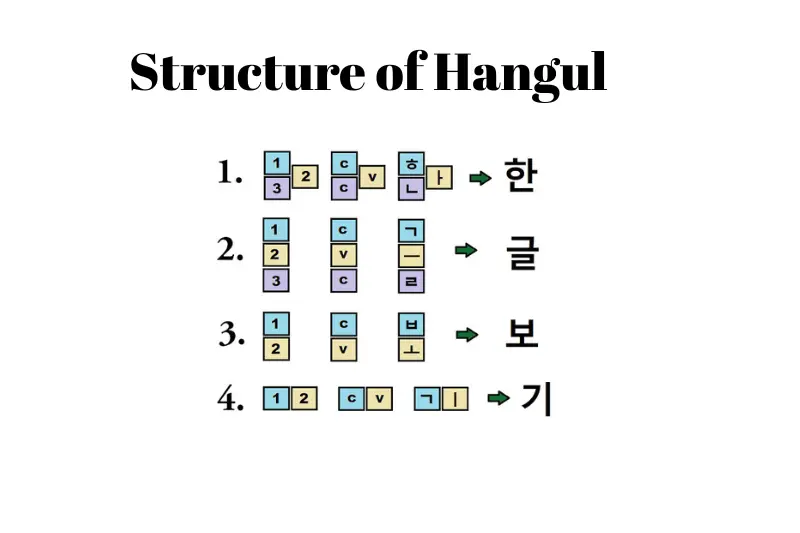
The Korean alphabet, Hangul, is made up of consonants (자음) and vowels (모음). One of the unique features of Hangul is that letters are combined into syllable blocks, making reading and writing much easier.
- Consonants
Hangul has 14 basic consonants. Here are some of the most common ones:
| Consonant | Sound Example |
|---|---|
| ㄱ | g/k as in “go” |
| ㄴ | n as in “no” |
| ㄷ | d/t as in “dog” |
| ㄹ | r/l as in “run” |
| ㅁ | m as in “mom” |
| ㅂ | b/p as in “bat” |
| ㅅ | s as in “see” |
| ㅇ | silent/ng as in “song” |
| ㅈ | j as in “job” |
- Vowels
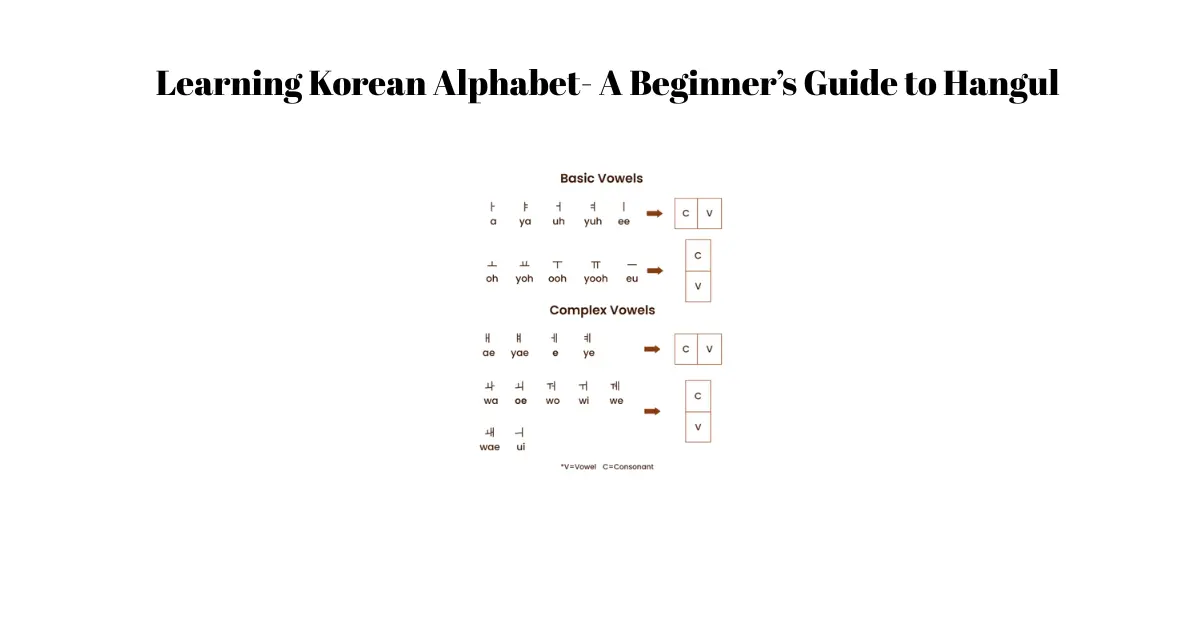
Hangul has 10 basic vowels. Here are a few examples:
| Vowel | Sound Example |
|---|---|
| ㅏ | a as in “father” |
| ㅑ | ya as in “yarn” |
| ㅓ | eo as in “sun” |
| ㅕ | yeo as in “young” |
| ㅗ | o as in “go” |
| ㅛ | yo as in “yoga” |
| ㅜ | u as in “moon” |
| ㅠ | yu as in “universe” |
- How Letters Form Syllables
In Hangul, a syllable block usually has 2–3 letters: a consonant + vowel (+ optional final consonant). For example:
- 한 (Han) = ㅎ + ㅏ + ㄴ
- 글 (Geul) = ㄱ + ㅡ + ㄹ
This block structure makes reading Korean much faster once you know the letters.
Learning the Korean letters and how to combine them is essential for learning the Korean alphabet effectively. With just a little practice, you can start forming simple words and reading basic texts.
May be you like it:
Education in Russia – Top Universities Programs And Opportunities for International Students
Education is Important to Society Because It Matters
Education Benefits for Veterans – Maximize Your GI Bill Scholarships And Training
Learning Korean Alphabet – A Beginner’s Guide to Hangul
Teacher Appreciation Week 2026 – Dates, Ideas, and Ways to Celebrate
Why Learning Korean Alphabet is Easier Than You Think
Many beginners worry that learning Korean will be difficult, but learning the Korean alphabet (Hangul) is actually simpler than it seems. Hangul was carefully designed in the 15th century by King Sejong the Great to be logical and easy to understand, even for people who had never learned to read or write before.
Simple and Logical Design
Each consonant in Hangul is based on the shape of the mouth or tongue when pronouncing the sound. Vowels are created from three basic symbols: a dot (•), a horizontal line (ㅡ), and a vertical line (ㅣ). This makes the writing system intuitive and easy to memorize.
Few Letters, Many Combinations
Hangul has only 14 basic consonants and 10 vowels, yet they can be combined into hundreds of syllables. This means you can read and write Korean words quickly once you learn the basics.
Easy Pronunciation
Unlike English, Korean pronunciation is mostly consistent. Once you learn the sounds of the letters, you can read most words accurately without relying on memorization or exceptions.
By understanding these simple principles, learning Korean alphabet becomes a fun and achievable goal. With just a little practice, you can start reading signs, menus, or even K-drama subtitles confidently.
Step-by-Step Guide to Learning Korean Alphabet
Learning the Korean alphabet may seem overwhelming at first, but breaking it into small steps makes it much easier. Follow this step-by-step approach to master Hangul efficiently.
Start with Vowels
Begin by learning the 10 basic vowels, such as ㅏ (a), ㅓ (eo), ㅗ (o), and ㅜ (u). Vowels are easier to memorize because their shapes are simple and consistent. Practice writing each vowel several times while saying the sound aloud—this reinforces memory and pronunciation.
Learn Consonants Next
Once you are comfortable with vowels, move on to the 14 basic consonants, like ㄱ (g/k), ㄴ (n), ㅁ (m), and ㅅ (s). Focus on the shape of the letter and the sound it makes. Combining consonants with vowels will allow you to start forming syllables.
Form Syllable Blocks
Korean letters are combined into syllable blocks, typically in the order of consonant + vowel (+ optional final consonant). For example:
- 한 (Han) = ㅎ + ㅏ + ㄴ
- 글 (Geul) = ㄱ + ㅡ + ㄹ
Practice creating simple blocks using the consonants and vowels you’ve learned.
Memorization Techniques
- Flashcards: Write letters on one side and pronunciation on the other.
- Apps: Use apps like Duolingo, Memrise, or Drops for daily practice.
- Writing Practice: Copy simple words from Korean signs, songs, or textbooks.
Read Simple Words
Start reading basic Korean words like:
- 엄마 (eomma) = mom
- 학교 (hakgyo) = school
- 한국 (Hanguk) = Korea
Reading simple words helps reinforce recognition and builds confidence.
By following these steps, you’ll quickly develop a strong foundation for learning the Korean alphabet and reading Korean texts with ease.
May be you like it:
Teacher Jokes | 50+ Funny Jokes for Teachers, Students And Adults
Teacher from Fairly OddParents – Mr. Crocker And School Characters Explained
Teacher Incentive Allotment – Benefits, Types, and How It Works
Teacher Vanderbilt Form – Step-by-Step Guide for Accurate ADHD Assessment
Learning Objective Verbs – A Complete Guide with Examples And Tips
Common Mistakes Beginners Make
When learning the Korean alphabet, beginners often make a few common mistakes that can slow down progress. Being aware of these pitfalls helps you learn Korean alphabet faster and more effectively.
Confusing Similar Letters
Some Hangul letters look very similar, such as ㄱ (g/k) and ㄲ (kk), or ㅂ (b/p) and ㅃ (pp). Take your time to notice the differences in shape and pronunciation, and practice writing them repeatedly.
Skipping Syllable Practice
Learning individual consonants and vowels is not enough. Many beginners fail to practice combining them into syllable blocks, which is essential for reading Korean words. Always practice forming blocks like 한 (Han) or 글 (Geul) to build real reading skills.
Ignoring Pronunciation Rules
Korean pronunciation is consistent, but some letters sound different depending on their position in a syllable. For example, ㄱ can sound like “g” at the start of a word but closer to “k” at the end. Pay attention to these rules to avoid mispronunciation.
Not Practicing Daily
Learning an alphabet requires repetition. Skipping practice sessions slows progress and makes it harder to retain letters. Daily practice, even for 10–15 minutes, is much more effective than occasional long sessions.
By avoiding these mistakes, you can accelerate your journey in learning the Korean alphabet, read Korean words correctly, and gain confidence quickly.
Practice Tips to Master Hangul Quickly
Mastering the Korean alphabet, or Hangul, becomes much easier with consistent practice and smart strategies. Here are some proven tips to help you learn Korean alphabet faster.
Practice Writing Daily
Write each consonant and vowel multiple times every day. Then, form simple syllable blocks and words. Writing reinforces memory and helps you internalize the shapes of the letters.
Read Simple Texts
Start reading basic Korean texts such as children’s books, menus, or simple online articles. Even if you only recognize a few words, this builds confidence and strengthens your reading skills.
Use Flashcards and Apps
Flashcards are excellent for memorization. Pair them with apps like Duolingo, Memrise, or Drops to practice letters, sounds, and syllables interactively.
Listen and Repeat
Pronunciation is crucial. Listen to Korean audio—songs, dramas, or podcasts—and repeat the words aloud. This improves your listening and speaking skills while reinforcing the letters you’ve learned.
Learn in Small Chunks
Instead of trying to learn all letters at once, focus on a few consonants and vowels each day. Gradually combine them into syllables, and your progress will feel faster and more manageable.
Incorporate K-Dramas and Music
Use your favorite K-dramas or Korean songs to spot letters and words in context. This makes learning fun and helps you connect written Hangul with real-life usage.
By following these tips, you can quickly gain confidence in reading and writing, making learning the Korean alphabet an enjoyable and rewarding experience.
Benefits of Learning the Korean Alphabet
Learning the Korean alphabet, or Hangul, offers numerous advantages for beginners and language enthusiasts alike. Understanding Hangul is the key to unlocking the Korean language and culture.
Travel with Ease
If you’re visiting Korea, reading signs, menus, and public transportation guides becomes effortless once you know the Korean alphabet. This makes traveling safer, more convenient, and far more enjoyable.
Enjoy K-Dramas and Music Without Subtitles
Knowing Hangul allows you to read lyrics, subtitles, and on-screen text in K-dramas and movies. This enhances your entertainment experience and accelerates your language learning.
Boost Language Skills
Mastering Hangul strengthens your overall Korean language abilities. Reading and writing the alphabet improves vocabulary, pronunciation, and comprehension, providing a solid foundation for speaking Korean confidently.
Faster Learning Curve
Hangul’s logical structure makes it one of the easiest alphabets to learn. Once you master it, you can quickly progress to forming words, sentences, and eventually engaging in conversations.
Learning the Korean alphabet is not just about letters—it’s a gateway to culture, travel, entertainment, and language mastery.
Conclusion & Next Steps
Learning the Korean alphabet, or Hangul, is simpler than many people think. With its logical design, small number of letters, and consistent pronunciation rules, anyone can start reading and writing Korean confidently with regular practice.
By following the steps outlined in this guide—starting with vowels, learning consonants, forming syllable blocks, and practicing daily—you can quickly build a strong foundation in learning Korean alphabet. Not only will this help you read signs, menus, and simple texts, but it will also allow you to enjoy K-dramas, music, and cultural experiences without relying on translations.
Next Steps:
- Review the consonants and vowels daily.
- Form simple syllables and practice reading them aloud.
- Use apps, flashcards, or Korean content to reinforce learning.
- Gradually move on to basic words and phrases.
Start today, and you’ll be surprised at how quickly you can read and write basic Korean words with confidence.
May be you like it:
Learning Calculus Made Easy – Beginner’s Guide to Mastering Calculus
Examkrackers MCAT – Complete Guide to High-Yield MCAT Prep And Study Resources
Exams Crossword Clue – Tips Examples and Answers to Solve Crossword Puzzles
