

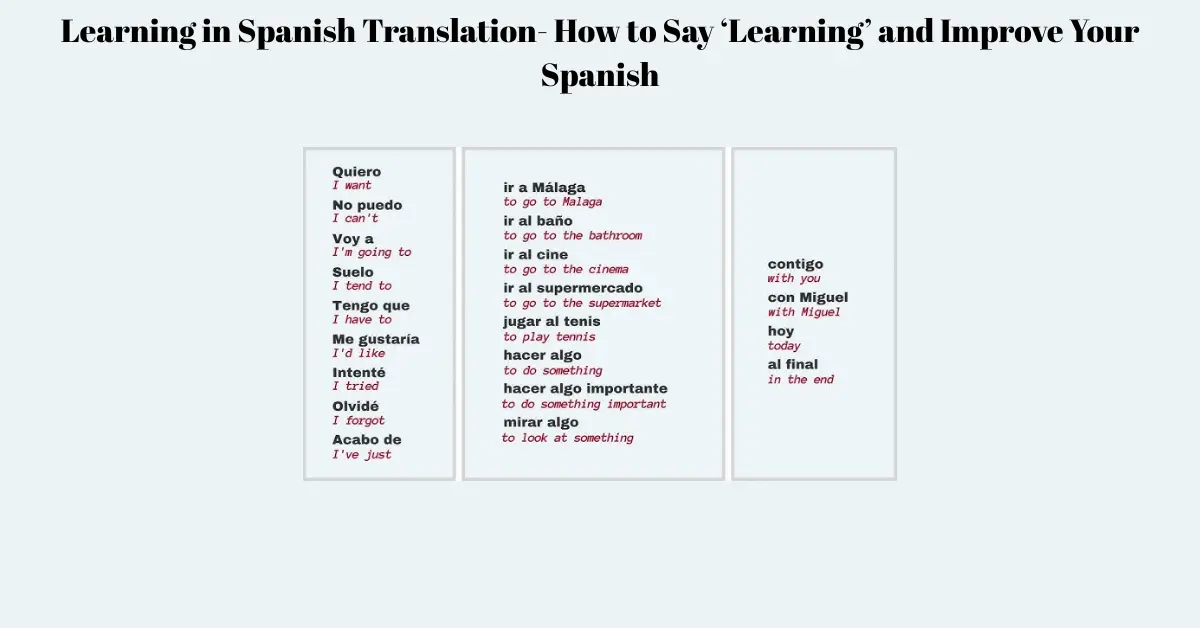
Learning a new language opens doors to new cultures, opportunities, and ways of thinking. If you’re curious about learning in Spanish translation, this guide will help you understand the meaning, usage, and related terms, making your Spanish journey smoother and more effective. Translation is more than just swapping words from one language to another—it’s about capturing the context, nuance, and intent behind the message. For learners, knowing how to translate key terms like “learning” accurately can boost both comprehension and communication skills.
In this article, we’ll break down the Spanish equivalents of “learning,” provide practical examples, and highlight common mistakes that beginners often make. Whether you’re studying for school, preparing for travel, or simply passionate about languages, these strategies will help you remember vocabulary, use words correctly in sentences, and enhance your overall fluency. By the end, you’ll not only know how to say “learning” in Spanish but also gain actionable tips to integrate it into everyday conversation confidently.
What Does ‘Learning’ Mean in Spanish?

The English word “learning” can be translated into Spanish in different ways depending on the context. The most common translation is “aprendizaje”, which is a noun referring to the process of acquiring knowledge or skills. For example, “lifelong learning” translates to “aprendizaje a lo largo de la vida”.
When referring to the act of learning something in the present moment, Spanish often uses the verb “aprender”. For instance, “I am learning Spanish” becomes “Estoy aprendiendo español”. Understanding the difference between “aprendizaje” (the concept or process) and “aprender” (the action) is crucial for accurate communication.
For beginners, knowing these translations is essential. Using the wrong form can confuse listeners or make sentences sound unnatural. By learning both the noun and verb forms, you can confidently use the word “learning” in different situations, from casual conversations to academic contexts.
Related tip: Start practicing with simple sentences and gradually incorporate more complex phrases to strengthen your Spanish vocabulary.
May be you like it:
Exams Quotes for Students – Motivational And Positive Exam Quotes
Education Theories – Types Importance, And Classroom Applications
Education Theorists – Key Thinkers and Learning Theories Shaping Modern Education
Learning in Spanish Translation – How to Say ‘Learning’ and Improve Your Spanish
Learning Multiplication – Fun Easy and Effective Ways for Kids to Master Times Tables
Common Phrases Using ‘Learning’ in Spanish
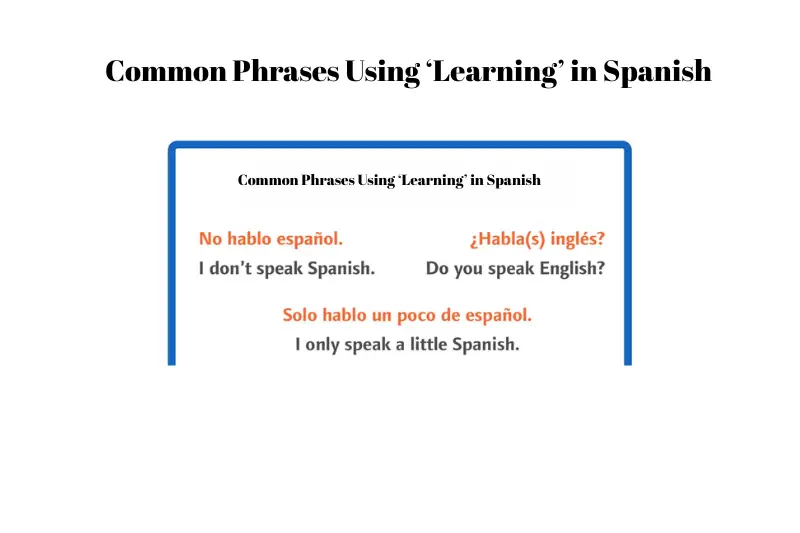
Once you know that “learning” translates to “aprendizaje” or “aprender”, the next step is using it naturally in everyday phrases. Here are some common examples:
- I am learning Spanish → Estoy aprendiendo español
- Here, “aprendiendo” is the present participle of the verb “aprender”, showing an ongoing action.
- Lifelong learning → Aprendizaje permanente
- Perfect for discussing personal growth or education in formal contexts.
- Learning new vocabulary → Aprendiendo nuevo vocabulario
- Use this when describing your study routines or language practice.
- The learning process is important → El proceso de aprendizaje es importante
- Demonstrates how to use “aprendizaje” in a noun form in a sentence.
Tip for beginners: Start by memorizing these common phrases and saying them out loud. Repetition helps reinforce the meaning and pronunciation, making it easier to use “learning” correctly in Spanish conversations.
Tips for Learning Spanish Vocabulary Effectively
Mastering Spanish vocabulary, including words like “learning”, requires consistent practice and smart strategies. Here are some proven tips to boost your retention and fluency:
- Use Flashcards: Write Spanish words on one side and their English meaning on the other. For example, “aprendizaje” → learning. Digital apps like Anki or Quizlet make reviewing easier and more interactive.
- Practice in Context: Instead of memorizing words alone, use them in sentences. For instance, “Estoy aprendiendo español todos los días” helps you remember both the meaning and usage of “aprender”.
- Label Your Environment: Attach sticky notes with Spanish words to everyday objects. This constant visual exposure strengthens memory and helps you recall vocabulary naturally.
- Engage with Media: Listen to Spanish podcasts, watch shows, or read articles. Seeing and hearing words like “aprendizaje” in real contexts reinforces learning.
- Review Regularly: Spaced repetition ensures words move from short-term to long-term memory, making your Spanish vocabulary more reliable.
By applying these Spanish language learning tips, you’ll not only remember translations but also use them confidently in conversation.
May be you like it:
Education in Russia – Top Universities Programs And Opportunities for International Students
Education is Important to Society Because It Matters
Education Benefits for Veterans – Maximize Your GI Bill Scholarships And Training
Learning Korean Alphabet – A Beginner’s Guide to Hangul
Teacher Appreciation Week 2026 – Dates, Ideas, and Ways to Celebrate
Tools to Help with Spanish Translation and Learning
Learning Spanish becomes much easier when you use the right tools to support your study. These resources can help you translate words like “learning” accurately and practice your skills effectively:
- Online Dictionaries: Websites like WordReference or SpanishDict provide precise translations, example sentences, and pronunciation guides for words such as “aprendizaje” and “aprender.”
- Language Learning Apps: Apps like Duolingo, Babbel, and Memrise offer structured lessons, quizzes, and spaced repetition, making it easier to remember vocabulary.
- Flashcard Tools: Digital flashcards on Anki or Quizlet let you review words regularly, reinforcing your understanding of terms like “learning in Spanish translation.”
- Spanish Podcasts & Videos: Listening to native speakers on podcasts, YouTube channels, or language courses helps you understand how words are used naturally in conversation.
- Grammar and Writing Tools: Platforms like LingQ or Reverso provide translation examples and grammar explanations, ensuring your sentences are accurate and fluent.
By combining these tools with regular practice, you can confidently translate English words into Spanish, expand your vocabulary, and improve your overall language skills.
May be you like it:
Teacher Jokes | 50+ Funny Jokes for Teachers, Students And Adults
Teacher from Fairly OddParents – Mr. Crocker And School Characters Explained
Teacher Incentive Allotment – Benefits, Types, and How It Works
Teacher Vanderbilt Form – Step-by-Step Guide for Accurate ADHD Assessment
Learning Objective Verbs – A Complete Guide with Examples And Tips
Common Mistakes to Avoid
When learning how to translate “learning” into Spanish, beginners often make mistakes that can affect clarity and fluency. Being aware of these common errors can save you time and frustration:
Confusing “aprendizaje” and “aprender”
- “Aprendizaje” is a noun meaning the process of learning, while “aprender” is the verb to learn. Using them interchangeably can sound unnatural.
- Incorrect: Estoy aprendizaje español.
- Correct: Estoy aprendiendo español.
Overusing literal translations
- Translating word-for-word may not capture the nuance in Spanish. For example, “I have a learning” doesn’t make sense in English or Spanish.
Ignoring gender and number in related words
- Spanish nouns and adjectives have gender. For example, aprendizaje interesante (interesting learning) must match correctly.
Pronunciation mistakes
- Mispronouncing key words like “aprendizaje” can lead to misunderstandings. Listening to native speakers helps avoid this.
By avoiding these mistakes and practicing consistently, you can use learning in Spanish translation correctly and naturally in your conversations.
Conclusion
Understanding learning in Spanish translation is an essential step for anyone studying the language. By knowing that “learning” can be translated as “aprendizaje” or “aprender”, and by practicing its use in sentences, you can communicate more accurately and confidently. Incorporating common phrases, vocabulary tips, and helpful tools will make your learning process smoother and more effective.
Avoiding common mistakes, such as confusing the noun and verb forms or relying on literal translations, ensures your Spanish sounds natural and fluent. Consistent practice, exposure to native content, and using resources like apps and online dictionaries will strengthen your skills over time.
Whether you are a beginner or looking to refine your Spanish, applying these strategies will help you not only translate words like “learning” correctly but also integrate them seamlessly into daily conversation. Start practicing today and take your Spanish language journey to the next level.
May be you like it:
Learning Calculus Made Easy – Beginner’s Guide to Mastering Calculus
Examkrackers MCAT – Complete Guide to High-Yield MCAT Prep And Study Resources
Exams Crossword Clue – Tips Examples and Answers to Solve Crossword Puzzles
