

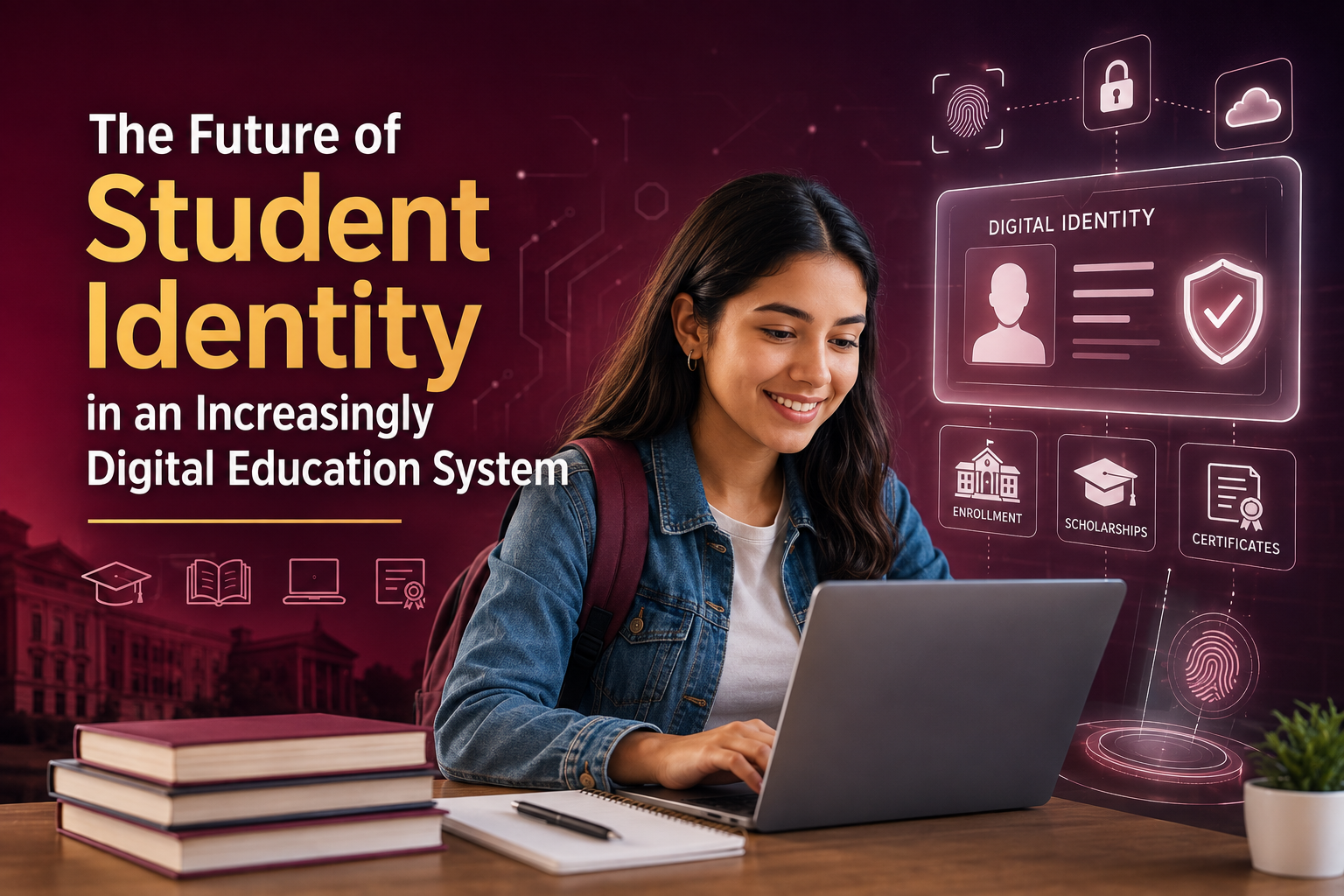
Education is becoming increasingly digital. Students can now enroll in programs, apply for scholarships, access learning platforms, download academic documents, and communicate with institutions without visiting a physical office.
But behind many of these digital services is a fundamental requirement: identity.
As education systems become more connected, institutions need reliable ways to determine who a student is, while students need secure and convenient methods of proving their identity. This is creating a new conversation around digital student identity and its role in the future of education.
Mexico provides an interesting example of this transformation. The country is developing a broader digital identity ecosystem in which the CURP and Llave MX are becoming increasingly important components of online government services.
What Is Digital Student Identity?
Digital identity is the collection of information and credentials used to recognize and authenticate a person in a digital environment.
For students, this can include identifying biometric information, account credentials, institutional records, and digital documents. Depending on the service, different systems may use different combinations of information to verify that a student is the correct person.
The concept is not simply about creating another username and password.
A mature digital identity system can connect a person’s verified identity with multiple services while reducing the need to repeatedly submit the same information.
This becomes particularly valuable as education moves across multiple digital platforms.
Why Student Identity Matters More Than Ever
A student’s educational journey may involve many different institutions and services.
A learner might interact with:
- A school or university
- Scholarship programs
- Government education portals
- Online learning platforms
- Examination systems
- Student financial services
- Professional credential systems
Each interaction can involve identity verification.
Without effective digital identity infrastructure, students may repeatedly upload documents, fill out forms, create separate accounts, or visit offices to verify information.
Digital identity has the potential to reduce this administrative burden.
The objective is not simply convenience. Accurate identification can also help institutions maintain reliable records and deliver services to the correct individuals.
Mexico’s Digital Identity Transformation
Mexico is already moving toward a more connected digital identity environment.
Llave MX represents an important step in this direction. It provides a digital authentication system that allows people to access various government procedures, programs, and services online.
The development is particularly relevant to students because education-related services are increasingly being delivered through digital platforms.
For example, digital identity systems can be connected with education programs, scholarship applications, and other student services.
This demonstrates how identity infrastructure is becoming connected with educational opportunities.
CURP as a Foundation for Digital Services
The CURP has long served as a standardized identifier for people in Mexico. Its importance is now extending into the country’s digital transformation.
For students, this can have practical implications.
A student may need their CURP when applying for an educational program, scholarship, government service, or other administrative process. Having accurate access to this information can therefore make digital procedures easier to complete.
Students and families who need to access their CURP online should use reliable sources and verify that their personal information is correct before submitting it to an institution.
From Paper Records to Connected Student Services
Traditional education administration often depends heavily on paperwork.
Students may have historically needed to provide copies of identification documents, certificates, proof of address, and other records for different procedures.
Digital systems can reduce some of this repetition.
Instead of asking students to repeatedly provide the same information, connected platforms can potentially use verified information already associated with their digital identity.
The broader idea is significant: student interactions with public institutions could become more connected and less dependent on physical paperwork.
Scholarships Are an Important Example
Financial support programs illustrate why reliable student identity matters.
Scholarship applications often require institutions to determine whether an applicant is the correct person and whether the submitted information corresponds to existing records.
Digital identity can help streamline this process.
When students use a verified digital identity to access educational opportunities, the process can become more organized and potentially reduce administrative errors.
This is a useful example of how identity, education, and digital administration are becoming interconnected.
The Benefits for Students
A well-designed digital identity system can offer several advantages.
Less Administrative Friction
Students may spend less time repeatedly entering personal information or submitting identical documents.
Faster Access
Online authentication can allow students to access services without always traveling to an administrative office.
Better Record Management
Consistent identity information can help institutions associate records with the correct student.
Greater Convenience
Students can manage certain educational procedures through computers and mobile devices.
Easier Access to Opportunities
Digital platforms can make it easier for students to discover and apply for programs, scholarships, and other opportunities.
However, these benefits depend on the underlying systems being accurate, secure, accessible, and easy to use.
Digital Identity Does Not Mean More Data Should Be Collected
One important misconception is that digital transformation requires collecting as much information as possible.
It should be the opposite.
A responsible identity system should collect and process information for clearly defined purposes and protect that information from unauthorized access.
Student records can contain sensitive information. Educational institutions and technology providers therefore need appropriate security controls and privacy practices.
Students should also develop good digital habits, including using strong passwords, protecting authentication credentials, avoiding suspicious websites, and checking what information they are providing.
Security Will Become a Central Issue
As more educational services move online, identity theft and account compromise become increasingly important concerns.
A compromised student account could potentially expose personal information or provide unauthorized access to educational services.
This means digital identity systems need multiple layers of protection.
Authentication methods, secure infrastructure, access controls, monitoring, and clear recovery procedures all have a role to play.
The broader lesson for education is clear: convenience and security need to develop together.
The Digital Divide Cannot Be Ignored
Digital identity can make education more accessible, but only if students can actually access digital services.
Not every learner has the same internet connection, smartphone, computer, digital skills, or level of familiarity with online platforms.
If education systems move too quickly toward digital-only processes without providing alternatives or support, some students could be left behind.
Future student identity systems should therefore consider accessibility from the beginning.
Mobile-friendly platforms, clear instructions, assistance channels, accessible interfaces, and appropriate alternatives can help ensure that digital transformation benefits a wider range of learners.
Digital Identity and Academic Credentials
Student identity could eventually become increasingly connected with academic credentials.
Digital certificates and verifiable qualifications can make it easier for graduates to demonstrate their achievements to employers or educational institutions.
As more professional and educational procedures move online, students may increasingly use digital identity information when applying for credentials, verifying qualifications, or completing career-related administrative processes.
This points toward a broader future in which educational achievements can be verified digitally rather than relying exclusively on physical certificates.
What Could the Future Student Experience Look Like?
Imagine a student beginning a new educational program.
Instead of completing multiple paper forms, the student could authenticate securely through a recognized digital identity. Relevant information could then be verified with permission, while the student accesses enrollment, scholarship, academic, and administrative services through connected platforms.
The student would still control their account and should understand what information is being shared.
This type of experience could make education administration significantly more efficient.
It could also allow institutions to focus more resources on education rather than repetitive administrative processes.
The Role of Digital Literacy
Digital identity also creates a new responsibility for educators.
Students need to learn more than how to use educational software. They need to understand basic digital security, privacy, authentication, responsible data sharing, and how to recognize legitimate online services.
Digital literacy is therefore becoming an essential part of modern education.
A student who understands how to protect an online identity is better prepared not only for school but also for employment, financial services, government procedures, and everyday digital life.
A More Connected Education System
The future of student identity is unlikely to involve a single technology solving every administrative challenge.
Instead, it will probably involve greater interoperability between systems.
Schools, universities, government agencies, scholarship providers, and other organizations may increasingly rely on secure ways to exchange or verify information while maintaining appropriate privacy protections.
Education is likely to remain an important part of this transformation.
As digital identity becomes more widespread, students may increasingly expect their educational services to be accessible through connected and secure digital platforms.
Conclusion
The future of education is not only about smarter classrooms, artificial intelligence, or online learning platforms. It is also about creating reliable digital infrastructure that allows students to move through the education system more efficiently. Digital identity can help connect students with enrollment systems, scholarships, educational records, government services, and eventually digital credentials. Mexico’s development of CURP-linked digital services and digital authentication systems provides an important example of this transition. But the success of digital student identity will depend on more than technology. Privacy, security, accessibility, accuracy, and digital literacy must remain central to the process. When those principles are respected, digital identity can become more than an administrative tool. It can become an important part of a more connected, accessible, and student-centered education system.
