

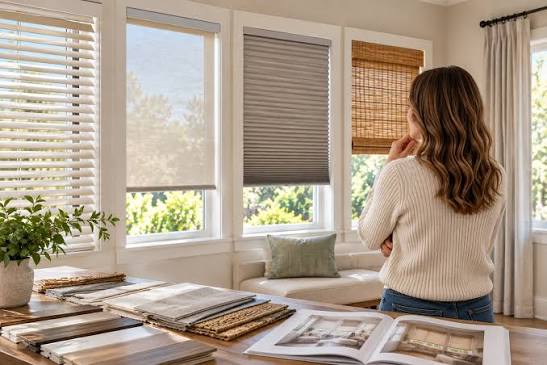
It is therefore worth reassessing the blinds rather than assuming the old window coverings will automatically suit the new glazing.
A blind that worked well with chunky white frames may feel too heavy beside slimmer replacements. A colour that once blended into timber surrounds may suddenly look disconnected from a cleaner frame finish. Even the way the blind sits within the recess can change.
The goal is not to replace a blind simply because the window is new. It is to check whether the treatment still works with the proportions, colour and practical details of the updated opening.
Start by looking at what has actually changed
New windows often affect more than the glass itself.
Compare the old and new openings carefully.
Look at:
- the width of the visible frame;
- the depth of the recess;
- the position of handles;
- how far the window opens;
- any new vents or hardware;
- the colour and finish of the frame;
- and the amount of glass now visible.
A seemingly small change can alter the way a blind looks.
Slimmer frames may make the room feel lighter and the glass more prominent. Deeper frames can change where a blind can sit. A darker frame may create a stronger visual outline than the previous one.
It helps to treat the replacement window as a new design element rather than a like-for-like swap.
Give the room time to reveal its new proportions
The first instinct after new windows are fitted can be to put the old blinds straight back.
That may be practical temporarily, but it is worth stepping back before deciding whether they still belong.
New frames can change how tall, wide or open the window feels. If more glass is visible, a previously substantial blind may suddenly appear bulky. If the frame itself is stronger or darker, a bold blind can create too much visual weight.
For homeowners considering blinds brighouse after a window replacement, looking at the room from the usual seating position can help reveal whether the old treatment still suits the new proportions or now feels out of scale.
The difference is often easier to see from across the room than from directly beside the glass.
Reconsider colour instead of automatically matching the frame
A new window frame may introduce a completely different colour into the room.
White replacements are common, but so are grey, black, timber-effect and painted finishes.
The blind does not have to match the frame exactly.
In fact, matching too closely can sometimes make the entire opening feel like one large block. A softer relationship may be more successful.
A warm neutral blind can sit comfortably with a dark frame. A muted colour may soften a bright white surround. A textured fabric can add warmth where the new window feels visually sharper than the previous one.
Think about the whole room rather than making the frame the only reference point.
Let the new window influence the style of the room
Replacement windows can quietly modernise an interior.
Even if no furniture changes, cleaner lines and slimmer profiles can make the room feel more contemporary.
That may reveal that an older blind is visually heavier or more decorative than the room now needs.
The reverse can also happen.
A replacement window designed to suit a period property may restore stronger frame proportions or a more traditional appearance, making a very stark blind feel less at home.
Window replacement is therefore a useful moment to reassess the balance between old and new throughout the room.
The blind should respond to that updated character rather than simply reproduce what was there before.
Check whether the old recess arrangement still makes sense
A new frame can change the usable depth of a recess.
That matters because a blind that once sat comfortably inside the opening may now compete with handles, vents or the frame itself.
Measure the finished opening again rather than relying on previous dimensions.
Check:
- the depth at several points;
- the narrowest width;
- the finished height;
- handle projection;
- vent positions;
- and any new trim around the frame.
The old fitting position may no longer be the best one.
A blind that technically fits can still look awkward if it sits too far forward or crowds the updated frame.
Do not assume the old measurements remain valid
This is one of the most important practical points after replacing windows.
Even if the overall opening has not changed dramatically, the finished dimensions may be different enough to affect a made-to-measure blind.
New plaster, trims, packers, cills and frame profiles can all alter the available space.
Measure the completed opening as it exists now.
Do not rely on old order details, architectural drawings or the dimensions of the previous blind.
Any product-specific deductions should follow the relevant supplier or manufacturer guidance rather than being improvised.
Check the handles before choosing anything
Replacement windows often come with different handles.
They may project further, sit in a different position or require a larger turning arc.
This can affect where the blind sits and whether it can operate freely.
Open and close every window fully.
Rotate the handles through their normal movement and check whether anything enters the space where the blind or its hardware would sit.
This is particularly important where the previous blind was fitted close to the frame.
A new handle can make an old arrangement impractical even if the opening dimensions seem almost unchanged.
New opening patterns may change how the blind is used
Replacement windows can also change how the room is ventilated.
A previous fixed pane may now open. An old side-hung window may have been replaced by a different configuration. New vents may make frequent manual opening less necessary.
These changes affect the way the blind needs to work.
If a particular window is now opened every day, easy access becomes more important. If one section has become fixed, a previously necessary clearance issue may no longer matter.
The blind should respond to the new window’s actual movement rather than the routine associated with the old one.
Reassess how much daylight reaches the room
Replacement glazing and slimmer frames can change the amount and character of visible daylight.
Sometimes the difference is subtle; sometimes a larger glass area makes the room noticeably brighter.
That may affect the blind colour.
A shade that looked balanced before can appear darker when surrounded by more glass. Conversely, a pale treatment might now feel almost invisible in a much brighter opening.
Someone considering milnrow blinds after fitting new windows may find it useful to compare samples at several times of day, particularly if the replacement frames have changed the amount of visible glazing.
The blind should be judged in the room’s new light conditions, not remembered ones.
Use the opportunity to simplify an overcomplicated window
Window replacement can be a good moment to remove visual clutter.
Older windows sometimes accumulate layers over time: blinds, curtains, pelmets, nets or other treatments added at different stages.
Once the frames are renewed, the opening may look cleaner than before and may not need every layer reinstated.
Ask what each element is actually doing.
Is it needed for privacy? Light control? Softness? Decoration?
If several treatments perform the same role, the updated window may feel better with fewer of them.
A cleaner arrangement can allow the new frame and larger glass area to become part of the room rather than immediately hiding them again.
Keep curtains and blinds in proportion
If curtains are already part of the scheme, the blind should still work with them.
A new window frame may look visually lighter than the previous one, which can make heavy curtains and a substantial blind feel excessive together.
That does not mean curtains need removing.
It may simply mean the blind can become quieter.
Plain fabric, subtler colour or less visual bulk can allow the curtains to provide the softness while the blind takes care of everyday privacy and light control.
The two treatments should complement the new window rather than compete to cover it.
Think carefully about darker replacement frames
Dark grey and black frames create a strong outline.
They can look crisp and contemporary, but they also change the visual weight of the window.
Adding a very dark blind may strengthen that effect considerably once the blind is closed.
That can work well in a room with darker cabinetry, furniture or metal details. In a pale interior, however, the combination may feel more dominant than expected.
A softer blind can provide contrast while still allowing the frame to remain an architectural feature.
View the result as a whole rectangle rather than judging frame and blind separately.
Timber-effect frames need more than a near match
Trying to match a timber-effect frame exactly can be difficult and is not always necessary.
Two similar brown tones can look more mismatched than two deliberately different ones.
Instead of trying to imitate the frame, consider a complementary neutral, muted colour or textured material that sits comfortably beside it.
This often looks more intentional.
If the room also contains real timber furniture or flooring, judge all of those tones together. The aim is harmony, not duplication.
Reconsider privacy with clearer or larger glazing
A replacement window may give a cleaner view outside, but it can also change how visible the room feels from the street or neighbouring properties.
Larger panes and slimmer frames can increase the sense of openness.
That makes privacy worth reassessing.
Stand in the room during both daytime and evening conditions and consider the main sightlines.
Does the new window reveal more of the seating area than before? Is a bedroom now more exposed from a neighbouring upper floor? Does the room feel comfortable after dark when the lights are on?
The blind should respond to the new relationship between interior and exterior.
Evening appearance may feel completely different
New glazing and frame colours can change how the window looks after sunset.
During the day, the eye may focus on the outside view. At night, the glass darkens and the frame becomes much more noticeable.
A closed blind then forms part of that new composition.
This is why samples should be checked under artificial lighting.
A cool grey may become more obvious beside warm lamps. A cream may appear richer. A textured surface may become more pronounced.
If the room is used heavily in the evening, this version of the window matters just as much as its daytime appearance.
Let nearby windows guide consistency
If only some windows in the property have been replaced, the room may contain a mixture of old and new.
There is no need to force them to look identical.
However, window treatments can help create continuity.
Using a related blind colour or material across several openings can make different frame styles feel more connected.
In an open-plan area, this can be particularly useful where new extension glazing sits beside older windows in the original house.
The mechanisms may differ, but the design language can remain consistent.
Do not ignore the cill
Replacement windows can alter the depth, material or appearance of the window cill.
That may affect both the blind and the way the window is styled.
A deeper cill might now hold plants, lamps or decorative objects. A shallower one may leave less clearance. New stone or timber can introduce another colour to the palette.
Before reinstating old accessories, consider whether the cill should remain simpler.
The blind, frame and objects placed around the opening should feel like one composition rather than several unrelated layers.
Give new frames some visual breathing room
A newly replaced window often looks best when it can actually be seen.
If the frame is immediately obscured by furniture, heavy curtains and a bulky blind, much of the visual benefit of the replacement can disappear.
This is especially relevant where the new window has been chosen to create slimmer sightlines or a cleaner appearance.
Keep nearby furniture and decorative layers proportionate.
Allow enough of the frame and glass to remain visible that the room can benefit from the upgrade.
Do not rush to replace a blind that still works
Not every old blind needs changing.
If it still fits safely, operates properly and looks balanced with the new frame, keeping it may be entirely sensible.
The point is to reassess rather than automatically replace.
Look at:
- fit;
- condition;
- colour;
- proportion;
- operation;
- compatibility with new handles;
- and how it relates to the updated room.
If those elements still work, there may be no reason to change it simply because the window is new.
A practical post-replacement checklist
Once the new windows are fully finished, ask:
- Have the visible frame proportions changed?
- Is there more or less glass than before?
- Does the existing blind still feel correctly scaled?
- Has the recess depth changed?
- Do new handles or vents affect clearance?
- Does the window open differently?
- Are the old measurements still valid?
- Does the blind colour work with the new frame?
- Has the room become brighter?
- Is privacy different after dark?
- Do curtains and blinds now feel too heavy together?
- Are nearby windows visually coordinated?
- Does the frame have enough breathing room?
- Does the blind still make sense when viewed from across the room?
If several answers have changed, the window treatment probably deserves a fresh decision rather than an automatic reinstall.
Treat the new window as a new part of the room
Replacing windows is not only a maintenance or building project. It can subtly alter the proportions, colour and character of an interior.
The blinds should be considered in that new context.
Sometimes the existing treatment will still work perfectly. Sometimes a different colour, lighter visual approach or revised fitting position will better suit the updated opening.
The important thing is to judge the finished window as it now exists. When the blind responds to the new frame rather than the old one, the whole room is more likely to feel coherent and properly resolved.
Frequently Asked QuestionsCan I reuse my old blinds after replacing the windows?
Possibly. If the old blinds still fit correctly, operate safely and look balanced with the new frames, there may be no need to replace them. Measurements and clearances should still be checked because the finished opening may have changed.
Should new blinds match replacement window frames?
Not necessarily. Matching can create a clean uniform look, but complementary tones may be more suitable for the wider room. Consider walls, flooring, furniture and curtains as well as the frame colour.
Why should I measure again if the replacement window is the same size?
The overall structural opening may be similar while the finished recess, frame depth, trims, handle positions or usable fixing areas have changed. Final measurements should therefore be taken from the completed window.
Can replacement windows change how much privacy a room needs?
Yes. Larger glass areas, slimmer frames or a changed window layout can alter sightlines from outside. It is worth checking privacy again during both daytime and evening conditions.
When is the best time to order new blinds after window replacement?
Planning can begin earlier, but final made-to-measure dimensions are best taken once the replacement window, trims and surrounding finishes are complete and stable. This reduces the risk of measuring an opening that will still change during finishing work.
