

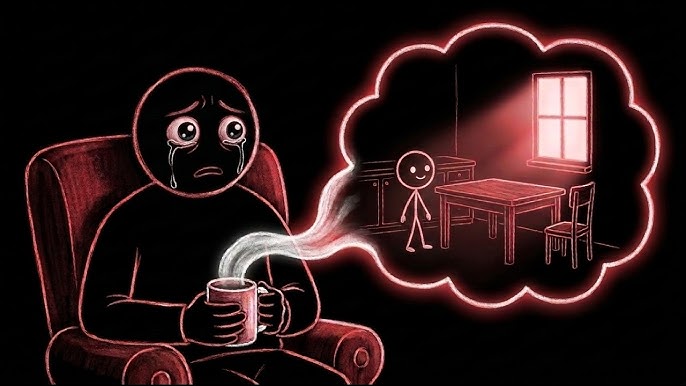
You can be walking through a hotel lobby, passing a bakery, opening an old drawer, or standing in a garden when it happens: a smell hits you, and suddenly you are somewhere else. Maybe it is your grandmother’s kitchen, your first school classroom, a summer holiday, an old apartment, or a person you have not thought about in years. The reaction can be so immediate that it feels less like remembering and more like briefly stepping back into the past. Few senses can trigger memories as quickly or as emotionally as smell.
There is a biological reason for this. Smell is processed differently from many other senses because the olfactory system has close connections with brain regions involved in memory and emotion. When you inhale a scent, odor molecules are detected in the nose and converted into signals that travel to the brain. These signals interact closely with areas such as the amygdala, which is involved in emotional processing, and the hippocampus, which plays an important role in forming and retrieving memories. Because of this close relationship, smells can become strongly attached to emotional experiences without us consciously realizing it at the time.
The same human tendency to connect sensory cues with meaning appears in visual communication too. Brands, for example, rely on distinctive colors, shapes, and symbols so people can recognize and remember them quickly, which is why businesses pay close attention when they design logos and build a consistent visual identity. Smell works through a different sense, but the underlying idea is similar: the brain becomes better at recalling something when it has a distinctive cue attached to it. A familiar scent can act like a mental shortcut, opening the door to memories that might otherwise remain difficult to access.
Why Smell Has Such a Strong Connection to Memory
The human brain receives information through many senses, but smell has an unusually direct relationship with emotional memory.
Visual and auditory information generally goes through several stages of processing before it is fully interpreted. Smell, however, is closely connected with parts of the limbic system, a group of brain structures involved in emotion, behavior, and memory.
This helps explain why a scent can create an emotional reaction before you have even identified what you are smelling.
You might suddenly feel relaxed, uncomfortable, nostalgic, or excited, and only seconds later realize that the scent reminds you of something from the past.
In other words, the emotional response can arrive before the conscious explanation.
That is part of what makes scent-triggered memories feel so surprising.
The Proust Effect
The phenomenon of smells triggering vivid autobiographical memories is sometimes called the Proust effect.
The term comes from French writer Marcel Proust, who famously described how the taste and smell of a madeleine cake dipped in tea brought back a flood of childhood memories.
Although the literary example involves both taste and smell, much of what we experience as flavor is actually influenced by the sense of smell.
Researchers later adopted the idea to describe the way odors can unexpectedly unlock detailed personal memories.
These memories are often emotional, old, and highly specific.
Someone might smell sunscreen and remember a childhood beach holiday.
Another person might smell a particular soap and immediately think of a relative’s home.
The scent of wet pavement may remind someone of walking home from school after summer rain.
These associations can remain hidden for years until the right smell brings them back.
Why Childhood Smells Can Be So Powerful
Many powerful scent memories come from childhood.
One reason is that childhood contains a large number of first experiences.
The first school classroom, first family holidays, favorite foods, childhood homes, relatives, parks, and seasonal traditions all introduce new combinations of sights, sounds, and smells.
Because those experiences are new, the brain often pays close attention to them.
Smell is quietly recorded as part of the environment.
Years later, encountering the same scent can reopen that entire memory network.
A particular laundry detergent might remind someone of their childhood bedroom.
The smell of pencil shavings could bring back memories of primary school.
Freshly baked bread may instantly evoke mornings spent with grandparents.
The interesting part is that people rarely choose these associations consciously.
They simply form as life happens.
Memories Are Stored as Networks
We often imagine memory as a collection of separate files stored inside the brain.
In reality, memories are more interconnected.
A single experience can contain visual information, sounds, smells, emotions, people, locations, and thoughts.
These elements become connected in a network.
Later, one part of the network can activate the rest.
Imagine visiting the same mountain village every summer as a child.
Your memory of those trips might include the sound of insects, cool evening air, a specific house, family conversations, local food, and the scent of pine trees.
Years later, you might encounter the same pine scent somewhere completely different.
Even though the location has changed, the smell can activate the old network.
Suddenly, other details begin appearing.
You remember the house.
Then the people.
Then a conversation.
Then an emotion.
The scent acts as the first domino.
Why Smell Memories Feel More Emotional
Smell-triggered memories often feel unusually emotional compared with memories recalled intentionally.
There are several possible reasons.
First, the connection between smell and emotional processing is strong.
Second, scent memories often arrive unexpectedly.
When you intentionally look at an old photograph, you already know you are about to revisit the past.
When a random smell triggers a memory, there is no preparation.
The emotional change can therefore feel more dramatic.
One second you are standing in the present.
The next, your mind has traveled fifteen years backward.
That sudden contrast increases the emotional intensity of the experience.
The Smell of People and Relationships
Scents are also strongly connected with people.
Perfume, shampoo, clothing, homes, cars, and everyday products can all become associated with someone we know.
This can create incredibly personal memory cues.
A familiar fragrance might immediately remind someone of a former partner.
The smell of a particular hand cream could bring back memories of a parent.
A certain aftershave may remind someone of a grandfather who used it for decades.
Even after a relationship changes or a person is no longer present, the scent association can remain.
Sometimes encountering that smell years later produces an emotional reaction that feels much stronger than expected.
This happens because the scent was repeatedly present during interactions with that person.
Over time, the brain connected the two.
Food Creates Powerful Scent Memories
Food is one of the richest sources of smell-based memory.
Family recipes, restaurants, holidays, cultural traditions, and everyday meals all create distinctive scents.
Think about the smell of bread baking, coffee brewing, soup simmering, spices heating in a pan, or cake coming out of the oven.
These scents rarely exist alone.
They are usually connected with people and situations.
A holiday meal might include conversations, music, relatives, decorations, and family traditions.
The smell of one dish can therefore become a trigger for the entire experience.
This explains why food can create such powerful nostalgia.
People are not simply remembering the flavor.
They are remembering where they were, who was there, and how that moment felt.
Places Have Their Own Smell
We usually describe places visually.
We talk about architecture, scenery, colors, and landscapes.
But places also have recognizable smells.
A seaside town may smell like saltwater and sunscreen.
A forest might smell of soil, leaves, and wood.
An airport may have its own mixture of coffee, cleaning products, luggage, and conditioned air.
Schools, libraries, hospitals, old houses, hotels, and shops can all have distinctive scent profiles.
When we spend enough time somewhere, those smells become part of the memory of the place.
Returning years later can therefore create a strange feeling.
Even before you consciously recognize the surroundings, the scent may feel familiar.
Why Some Smells Trigger Negative Memories
Not all scent memories are pleasant.
Because odors can become connected with emotionally intense events, they can also trigger uncomfortable memories.
A smell associated with illness, fear, conflict, or another stressful experience may create an immediate negative reaction.
Sometimes a person does not initially understand why the smell bothers them.
They simply feel tense or uneasy.
Eventually, they may realize that the odor resembles something from a difficult period in their life.
This is another example of emotional memory appearing before conscious recognition.
The reaction is not necessarily about the smell itself.
It is about what the smell represents.
Smell and Nostalgia
Nostalgia is one of the most common emotions produced by familiar scents.
Interestingly, nostalgia is not simply sadness about the past.
It often contains several emotions at once.
You may feel happiness because the memory was meaningful, sadness because the moment is gone, gratitude because it happened, and surprise because you had forgotten it.
That emotional complexity is one reason nostalgic experiences can feel so intense.
A scent can compress years of emotional history into a few seconds.
You might remember not only an event but also who you were at that time.
This is especially common when the smell comes from an important stage of life.
Why New Places Eventually Become Memory Triggers
The process continues throughout adulthood.
You are constantly creating new scent associations, even when you are not aware of it.
Imagine spending several months living in another city.
You regularly visit the same coffee shop, use the same shampoo, walk past the same bakery, and travel through the same train station.
At the time, these smells may seem completely ordinary.
Years later, however, encountering one of them again could bring the entire period back.
This means some of the scents surrounding you today may eventually become powerful nostalgia triggers.
You simply do not know which ones yet.
Can You Intentionally Create Scent Memories?
To some extent, yes.
Because repetition strengthens associations, deliberately using a particular scent during an experience can make it easier to connect the two.
Some people choose a specific perfume for a vacation.
Others burn a particular candle while working on an important creative project.
A family might prepare the same food every holiday.
Over time, the scent becomes associated with the event.
This can be a simple way of making experiences feel more distinctive.
However, the strongest associations often happen naturally rather than deliberately.
A scent becomes meaningful because it was repeatedly present during emotionally important moments.
Why Smell Is Difficult to Describe
Another interesting feature of smell is how difficult it can be to put into words.
People can often recognize thousands of scents but struggle to name them.
You might think, “I know this smell,” without being able to identify where it comes from.
This gap between recognition and language can make scent memories feel mysterious.
You know the smell belongs somewhere in your past.
Your brain begins searching for the connection.
Then suddenly, the memory appears.
This moment of recognition can feel incredibly satisfying because two pieces of information finally connect.
Smell, Identity, and Personal History
Our scent memories quietly form part of our identity.
They are connected with homes, family traditions, relationships, travel, work, school, and major changes.
A personal history is not only a collection of events.
It is also a collection of sensory environments.
The smell of your childhood home may be completely ordinary to someone else.
To you, it could represent years of memories.
A perfume that means nothing to one person may instantly remind another of their first job or first serious relationship.
The meaning exists not in the scent itself but in the experiences attached to it.
The Past Is Often Closer Than It Feels
Most of the time, we move through life thinking mainly about the present and the near future.
Old experiences fade into the background.
We assume they are forgotten.
Then a smell appears and proves otherwise.
A surprising amount of information may still exist in memory even when we are not actively thinking about it.
The right cue can make that information accessible again.
This is one of the fascinating things about memory.
Forgetting does not always mean that something has disappeared completely.
Sometimes it simply means we have not encountered the right trigger.
Conclusion
Certain smells can transport us back in time because the sense of smell is closely connected with the brain systems responsible for memory and emotion. Odors become attached to places, people, routines, and important experiences, often without us consciously noticing the connection as it forms.
Years later, encountering the same scent can reactivate an entire network of memories. A simple fragrance may bring back a childhood room, a family holiday, a relationship, or a period of life that had seemed almost forgotten.
What makes these moments so powerful is their immediacy. We do not always choose to remember. The memory simply arrives.
That is why scent can feel almost like a hidden time machine. The smell itself may last only a few seconds, but what it unlocks can span years of personal history.
