

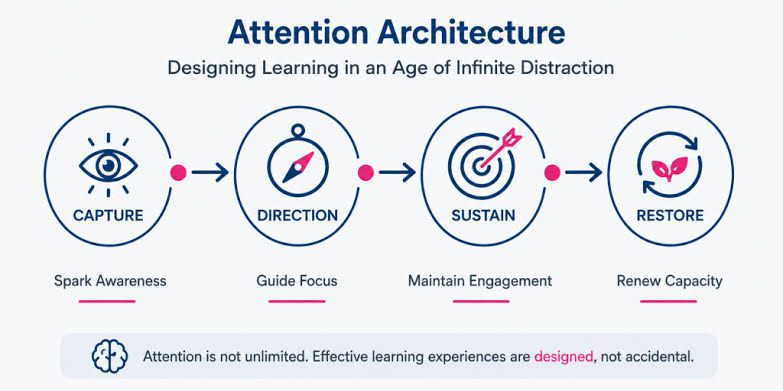
Digital platforms currently produce more content than ever before. Media sites publish daily updates. Niche communities expand their resource libraries. Specialized platforms continuously add new categories and features. Despite this growth, many websites struggle to increase engagement. Visitors often arrive, consume a single piece of content, and leave. This behavior indicates a failure in environment design rather than a lack of information. Users do not experience websites as collections of individual pages. They experience them as integrated environments.
The quality of a digital environment depends on how easily people move between related topics. It depends on how they discover relevant resources. It depends on their understanding of where to go next. Content ecosystems transform isolated assets into connected experiences. These ecosystems encourage deeper engagement and stronger retention. Professionals must move beyond content volume. They must focus on structural engineering to sustain attention in a competitive landscape.
The Engineering of Discovery in Digital Environments
Successful digital platforms understand that discovery is not accidental. It is a result of deliberate architectural choices. Every platform faces the same challenge as it grows. New content creates new opportunities. However, it also introduces complexity. Without a clear organizational framework, additional pages make information harder to find. Highly specific search behavior makes this challenge visible. Users expect immediate access to content that matches their intent. This puts pressure on platform architecture.
Structural presentation acts as a trust mechanism. News portals rely on structure to establish authority. They categorize headlines by politics, business, and sports. Breaking stories are highlighted. This segmentation builds clarity. Digital entertainment systems apply similar logic. They group games by theme, mechanics, and volatility. To understand how entry-level portals manage high-volume content, one can read more about lobby systems that utilize visual grids and category filters to streamline the selection process for diverse user bases. These lobby environments function as orientation hubs. They organize vast libraries into “Popular,” “New,” and “Thematic” sections. This reduces cognitive load. It enables informed participation. Users spend less time deciding where to click. They spend more time engaging with the core experience.
Designing for User Intent
Effective discovery systems share core characteristics:
- Logical segmentation of content modules to prevent information overload.
- Clear visual hierarchies that prioritize high-value or trending information.
- Predictable navigation pathways that align with user mental models.
- Contextual data layering that provides relevant details without requiring a page change.
- Fast loading times for primary elements to maintain interaction momentum.
The Psychology of Categorization
Information architecture influences search visibility and onboarding efficiency. It impacts internal search quality and customer satisfaction. A platform that guides users naturally through related topics creates stronger relationships. It makes future growth easier to manage. Niche communities often understand their audiences better than large websites. They observe recurring behavioral patterns. They design for these patterns. This produces a more intuitive experience than organizing content by date or department.
Behavioral Retention through Structured Progression
Engagement rarely happens on a single page. People consume information through sequences. A reader may start with a news story. They continue to background analysis. They explore related commentary. Strong ecosystems are designed around this behavior. Retention engineering focuses on creating these habitual loops. Film franchises retain audiences by extending narrative universes. Viewers anticipate sequels because the story evolves.
Mechanics of Continuous Engagement
Slot ecosystems retain participants through layered mechanics and progressive features. Structured advancement increases session length. Retention design requires deliberate pacing. Too much reward too quickly reduces anticipation. Too little reward reduces satisfaction. This applies to professional education as well. Learning platforms must provide immediate feedback. This reduces the gap between action and outcome. Traditional articles often have delayed feedback. A reader must finish a section and reflect. Live systems provide instant confirmation. This strengthens cognitive engagement.
Modern platforms use specific mechanics to drive repeat engagement:
- Identify peak engagement times to schedule content refreshes.
- Create content clusters that extend session duration through related topics.
- Implement personalized recommendations based on interaction history.
- Monitor drop-off points to identify friction in the user journey.
- Optimize the transition between core content and revenue-generating elements.
Aligning Monetization with User Flow
Trust depends on discipline. Disorganized platforms signal instability. Monetization must align with narrative flow. In film media, excessive ads interrupt reading. In interactive ecosystems, intrusive interface changes disrupt immersion. Revenue optimization should not fragment thematic continuity. Decision-makers must align monetization with user behavior patterns. Ads should load after primary content. Promotional elements should respect the thematic framing. Balanced monetization protects engagement depth. It sustains long-term revenue.
Strategic Implementation for Professional Platforms
Digital audiences compare platforms instantly. Every site competes for limited attention spans. Differentiation depends on narrative sophistication and structural clarity. Professionals should treat storytelling as strategic infrastructure. Thematic cohesion and performance stability define competitive positioning. Infrastructure resilience determines user perception during peak load. News platforms experience surges during major events. Entertainment sites see spikes during promotions.
Scalability and Infrastructure
Scalable systems require cloud-based frameworks. They need distributed content delivery networks. Optimized asset loading is essential for media-heavy environments. Visual immersion collapses under slow load times. Performance stability sustains continuity. High dwell time often correlates with structured tension. Data analysis should include average session duration per theme. It should measure engagement distribution across modules. Data-driven refinement strengthens emotional architecture.
The Power of A/B Testing
Platform owners must institutionalize experimentation. Small interface refinements can produce measurable gains. Optimization cycles should test alternative categorization frameworks. They should refine recommendation algorithms. They should measure the correlation between structure and duration. Learning platforms can use engagement loop modeling from gaming. This increases article session depth. Editorial clarity standards can be applied to complex interactive lists.
Conclusion
Content architecture is a measurable engagement tool. It is not an incidental feature. Structured presentation builds clarity. Clarity builds trust. Retention engineering builds habits. Professional platforms must move beyond the library model. They must build ecosystems. These environments reflect user motivations rather than organizational structures.
Narrative coherence wins attention. Structural discipline sustains it. Organizations that prioritize system coherence will gain a competitive advantage. They will turn curiosity into engagement. They will turn engagement into long-term retention. Success in digital markets requires engineered experiences. It requires a commitment to continuous optimization based on behavioral insights.
